

If you’ve been wondering how to build new friendships at this stage of life, you’re in exactly the right place. Whether your social circle has quietly thinned or you’re starting fresh in a new city, this guide is here to remind you that meaningful friendships are absolutely within reach – at any age, in any season of life.
Key Takeaways
- Making friends in your fifties is absolutely possible. It takes intentional effort, patience, and small, consistent steps – not perfection.
- Shifting friendships at midlife (moves, retirement, divorce, widowhood, caregiving, an empty nest) are normal life circumstances, not a personal failure – even if you feel like you have few or no friends right now.
- Social ties matter for mental health and well-being. The U.S. Surgeon General and the National Institute on Aging both recognize loneliness and social isolation as serious health concerns.
- Ways to meet new people after 50 include classes, volunteering, book clubs, walking groups, faith or community organizations, and friendship apps – and you may need to reach out first.
- Having high standards and boundaries is healthy. Focus on a few kind, reciprocal friendships over a big circle, and reach out for professional support – or the 988 Suicide & Crisis Lifeline in the U.S. – if loneliness feels overwhelming.
Why Making Friends in Your Fifties Feels Different (and More Powerful)
Friendship in your fifties is shaped by rich experience, shifting priorities, and a deeper sense of what truly matters. You know yourself better now – your values, your energy, your interests – and that clarity is a gift, not a limitation.
Midlife transitions have a way of quietly shrinking your social life. Retirement removes daily work friends. Adult children leave home. A husband or partner may pass away, or a marriage may end. Caregiving for aging parents or a partner absorbs the hours you once spent with friends. Moving across the country or to a small town can loosen ties you thought would last forever, sometimes in ways you don’t fully realize until months later.
Some women over 50 look around and think, “I have few friends left.” If that feeling is present for you right now, please know: it doesn’t mean something is wrong with you. It means life pulled everyone in different directions, and most people experience some version of this at some point.
Here’s what makes this stage powerful: you get to intentionally choose new friends who fit your current values, your preference for depth over small talk, and your high standards for kindness, reliability, and respect.
How Friendships Change in Midlife (And Why It’s Not Your Fault)
If you’ve noticed that it’s harder to maintain friendships than it used to be, you are not alone – and it’s not a reflection of your character or likability.
- Practical reasons friendships fade: Demanding careers can crowd out friendships without anyone meaning for that to happen. Long commutes, different retirement timelines, relocating to a new city, and health issues can all reduce the time you have for friends.
- Emotional reasons: Your values shift. You may prefer less drama and more honesty. You may step away from one-sided relationships or set firmer boundaries, and past hurts can make you more cautious with new people. If you’re going through a hard time emotionally, reaching out can feel much harder than usual.
- Life-stage mismatch: Some friends are still raising young children while you’re a grandparent, or you’re single again while they’re married, or you’re free to explore new restaurants and hobbies while they’re anchored by caregiving. Schedules and interests fall out of sync.
Choosing distance from unkind or unsupportive relationships is a sign of growth, not failure. It creates space for more nourishing ones. And a quick note about social media: hundreds of online followers don’t measure real friendship. Scrolling through other people’s posts can make it seem as if everyone else has a full calendar, but posts rarely tell the whole story. Society may count likes; what matters is whether you have people who truly see and support you.
The Quiet Cost of Loneliness – and the Gift of Friendship
Friendship isn’t just a pleasure – it matters for well-being, especially in later life. The U.S. Surgeon General’s advisory on loneliness and isolation describes social disconnection as a public health concern and reports that loneliness and social isolation increase the risk of premature death by 26% and 29%, respectively. The National Institute on Aging notes that loneliness and isolation are associated with higher risks for health problems such as heart disease, depression, and cognitive decline.
Here’s an important distinction: being alone and feeling lonely are not the same thing. Many women enjoy solitude – a quiet morning, an afternoon of writing, time with a good book. That can be peaceful and chosen. Loneliness is the painful gap between the closeness you want and what you actually have.
Even a couple friends – one or two good friends who are kind, present, and reciprocal – can bring comfort and genuine fun into your days. Quality often matters more than quantity at this stage of life. And if you’re wondering whether it’s too late: social skills can be practiced at any age. You can read more about loneliness and friendship after 50 for encouragement and perspective.
If You Feel Like a Woman With No Friends Right Now
If you’re reading this and thinking, “I personally have zero friends,” please hear this: you are far from alone. In the University of Michigan National Poll on Healthy Aging, 10% of adults age 50 and older said they don’t have any close friends – and that share was higher among those with fair or poor mental health (20%) or physical health (18%).
Common reasons include relocation, divorce, the loss of a husband or partner, estrangement from family, leaving a tight-knit workplace, burnout, or low self esteem after a difficult chapter. Stepping away from hurtful relationships can temporarily leave you with fewer people – but it can also protect your mental health.
If you’re ready for a first step, consider this: talk to one trusted person – a doctor, a neighbor, even your hair stylist. Attend one small local event. Join a low-pressure online group related to something you enjoy. You don’t have to overhaul your whole life at once. Just one small step.
You are not the only one. You are not behind. You are not broken.
Having few or no friends right now says nothing about your worth, your lovability, or your future. It simply means life circumstances shifted – and they can shift again.
Practical Places to Meet New Friends in Your Fifties
Making friends takes deliberate effort and initiative – but it also gets to be an adventure. Think of this as experimenting to find what fits your personality. Shared interests are often the easiest starting point, and community classes and local organizations are full of possibilities.
Local classes. Taking a class can lead to new friendships naturally. Community college courses, creative writing workshops, painting, language classes, dance, gardening clubs – choose topics you genuinely enjoy rather than forcing an interest. A shared hobby gives you something to talk about from day one.
Book clubs, library events, and discussion groups. Recurring meetings let you see the same faces again and again, and that familiarity makes it easier to open up. Your local library is a wonderful, free starting point.
Volunteering. Volunteering can connect you with like-minded people who share your values. Consider causes that call to you – animal shelters, literacy programs, reading with children at a local school, food banks, museums, hospital auxiliaries. Shared purpose makes conversation easier and more meaningful. Learn more about why community is so important over 50.
Movement-based groups. Walking clubs, pickleball, yoga, water aerobics, hiking groups – choose options that feel good for your body, and talk with your doctor if you have concerns.
Faith communities and organizations. A church, synagogue, mosque, or meditation center often has smaller circles – women’s groups, choir, knitting circles – where friendships take root. Civic clubs and neighborhood associations work too, and simply being involved locally can lead to spontaneous neighborly friendships.
Friendship apps and digital platforms. Activity-based sites such as Meetup, friend-finding modes in apps such as Bumble BFF, Nextdoor, and local Facebook groups are all ways people look for others nearby with shared interests. Social media can also help you reconnect or get introductions. Always follow basic safety tips: meet in a public place, tell someone where you’re going, don’t share financial or personal details early on, and trust your instincts.
An unexpected idea: if a pet fits your life, adopting a dog can introduce you to other dog owners at dog parks, on neighborhood strolls, and through rescue communities – a natural way to meet neighbors.

From Acquaintance to New Friend: How to Build Real Closeness
Saying hello once is only the beginning. Friendships need repetition, small gestures, and gradual openness to grow. Communication researcher Jeffrey Hall at the University of Kansas estimated that it takes roughly 50 hours together to move from acquaintance to casual friend, about 90 hours to become a friend, and more than 200 hours to become close friends. The exact numbers matter less than the message: friendship grows with time and repeated contact.
- Take initiative. Be the person who sends the text, suggests coffee, or follows up after a meeting. Many potential friends are waiting for someone else to make the first move.
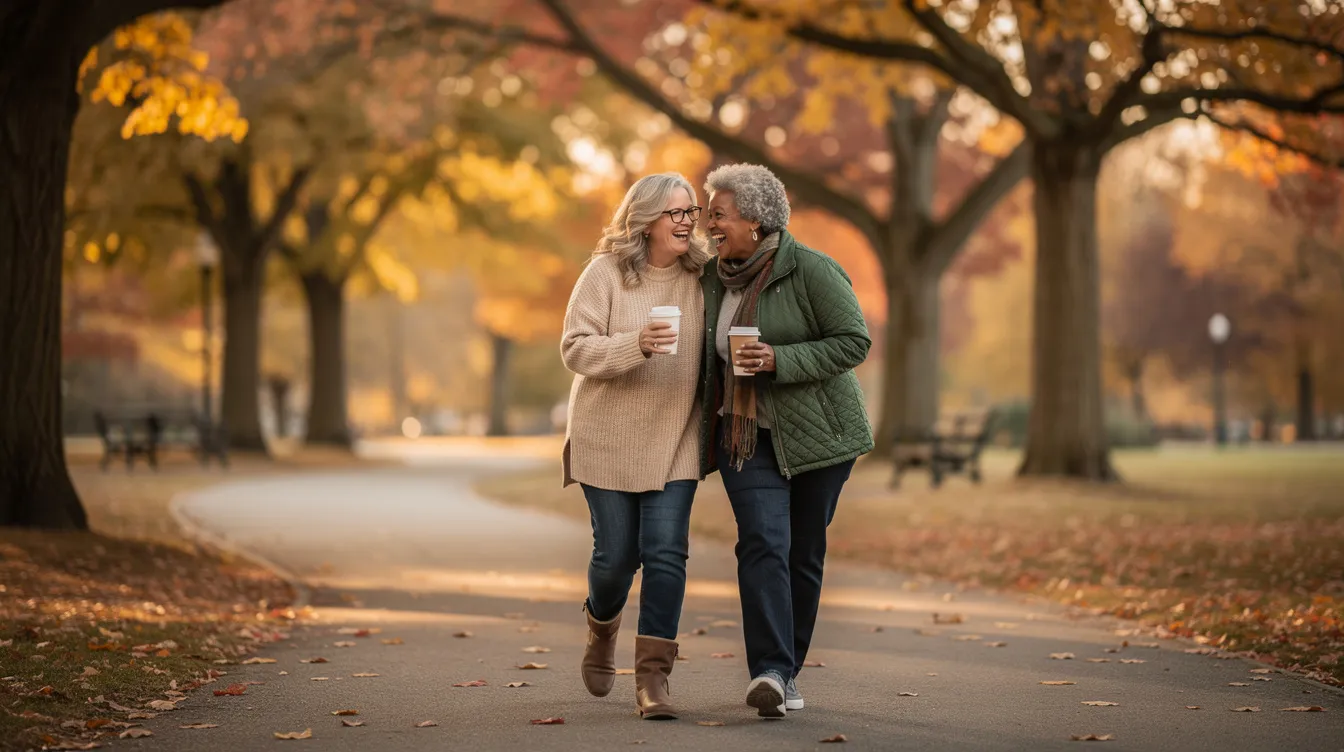
- Start small. Invite a new person for a 30-minute coffee, a stroll in a local park, or a browse through a farmers’ market. Low-pressure invitations feel manageable for everyone.
- Be curious. Ask questions. Listen closely. Remember details. Listening well – and letting yourself be known – helps deepen friendships.
- Share gradually. Open up in layers, letting trust build naturally while respecting your own boundaries.
- Stay consistent. Regular check-ins, texts, and recurring meetups slowly transform acquaintances into good friends.
Not every new person will become a close friend – and that’s healthy. Notice who is kind, reliable, and reciprocal. Those are the women worth your time.
Honoring Your High Standards While Staying Open
Having high standards for friendships after 50 is wise. You’ve earned the right to expect kindness, honesty, and reciprocity. But there’s a difference between healthy standards and perfectionism: look for shared values and emotional safety rather than expecting friends to be exactly like you.
Set boundaries that protect your well-being – limiting time with chronic complainers, stepping back from gossip, saying no when you’re exhausted. A small circle of new friends with different backgrounds, ages, or hobbies can enrich your life enormously. Asking people you already trust for introductions can expand your social circle in a natural, comfortable way.
Watch for red flags: chronic flaking, cruelty, constant drama. And notice green flags: she keeps her word, celebrates your wins, apologizes when she’s wrong. Stay open enough to let imperfect but good women into your life. Read more about choosing friends who mirror your values.
Nurturing Friendships When You’re Busy, Shy, or Anxious
Many women in their fifties juggle work, caregiving, family, and health issues. Social anxiety can make entering a room of strangers feel like a real problem. All of this is valid.
- Time-friendly nurturing: Send one thoughtful text a week. Share an article that made you think of her. Set a recurring monthly coffee date you both protect. These micro-habits hold more power than you might guess.
- Navigating shyness and social anxiety: Prepare a few conversation starters. Arrive early to events so you can settle in. Focus on one person at a time, and give yourself permission to leave early. Say yes to low-stakes invitations, and keep returning to the same low-pressure groups so faces become familiar.
- Practice self-compassion: After a social outing, reflect on one thing that went well instead of replaying every awkward minute. Making friends takes effort and consistency – and it also takes being gentle with yourself.
- When to seek support: If anxiety or depression makes socializing feel impossible, talking with a counselor or therapist can help. You can also read about prioritizing mental health as you age. And if loneliness ever feels overwhelming or you have thoughts of harming yourself, please call or text the 988 Suicide & Crisis Lifeline for immediate support.
Reconnecting With Old Friends and Letting Go With Grace
There’s a unique comfort in old friends who know your history – the ones who remember you before the kids and family responsibilities, before the career, before everything changed. Reaching out to people from your past can lead to renewed friendships, and it’s often worth a try.
Send a short message that references a specific shared memory: “I was recently looking through old school photos and thought of you.” Keep it warm, not apologetic. Some women will be delighted. Others may be in a different chapter – busy, nonresponsive, or simply elsewhere. None of that is a judgment of your worth.
Before you reach out, consider whether the relationship was mostly warm, respectful, and mutual. If it involved harm or betrayal, protecting yourself matters more than nostalgia. And if you need to let go of a friendship that’s ended, allow yourself to grieve. Journaling, a quiet stroll, or a small symbolic gesture can honor what it meant. You might miss what was – and that’s okay. There’s space now for what’s next.
Small Daily Practices to Invite Friendship Into Your Life
Building friendships is a long game. These small, repeatable habits gradually make you more open and visible to the women around you.
- Practice warm micro-interactions. Smile at neighbors. Make eye contact with the woman at your yoga class. Offer a compliment to someone you see regularly. Shared activities give friendship an easy, low-pressure foundation.
- Be findable. Say yes more often to local invitations. If you use friendship apps, add a friendly photo and an honest bio. Attend recurring events instead of one-offs – the regularity matters.
- Align your outer life with your inner interests. Join groups that reflect your current passions – style, travel, books, spirituality, or crafting – so you naturally meet like-hearted women. Explore ideas for growing into new friendships after 50.
- Reflect weekly. At the end of each week, note anyone you enjoyed talking with. Choose one small follow-up: a message, an invitation to spend time together, or simply marking when you’ll see her again.
Celebrate small progress rather than expecting an instant best friend. Every warm moment adds up.

FAQ: Making Friends in Your Fifties
Here are answers to a few questions many women over 50 quietly wonder about.
Is it normal to have fewer close friends in my fifties than I did in my twenties?
Yes. A smaller, more selective circle in midlife is common, thanks to moves, work, caregiving, and evolving values. In the same University of Michigan poll, 48% of adults 50 and older said they have one to three close friends. One to three supportive, reciprocal friendships can be deeply fulfilling.
How do I avoid getting hurt or ghosted when I try to make new friends?
Pace yourself. Start with small investments of time and watch for consistency over several months. Look for reciprocity – does she reach out, remember things, show up? If someone flakes repeatedly, it’s okay to step back and spend your time on women who are present and reliable.
What if I’m introverted and get drained by big group activities?
If you prefer smaller, quieter settings, try one-on-one coffees, a small book club, or a stroll with one new friend. You don’t need many friends or loud events to build meaningful friendships. Introversion isn’t a barrier; it’s simply your style.
Can online connections become real friendships after 50?
Yes. Many people form real friendships through interest groups, forums, and friendship apps, especially when they move some interactions to phone or video calls. When it feels safe, meeting in a public place can deepen the bond.
Where can I find more encouragement?
We’re here for you. Explore more Honey Good stories on friendship after 50 – we hope you’ll find answers and inspiration there.
Find Your People with Honey Good
Friendship after 50 is not a closed door – it’s an open invitation. Start with one small step this week, be patient with yourself, and trust that the right women are out there looking for you, too.
Keep exploring Honey Good stories on relationships, community, and living fully after 50. Join the Honey Good newsletter for encouragement delivered to your inbox, and browse the Honey Good boutique for thoughtful gifts to share with the friends – old and new – who make life brighter.
+ show Comments
- Hide Comments
add a comment