



Taking The High Road: What the High Road Means
Is taking the high road always commendable? Society says it is a superior way to handle oneself. For those of you who are not certain of what taking the high road means here is the definition. Taking the high road means to take the honest and noble path.
The phrase ‘taking the high road’ has an interesting history. In British terminology, main streets were called ‘high streets,’ while back streets were called ‘low streets.’ This distinction highlighted the high road as a path of grace and dignity, in contrast to the low road, which was associated with negative behaviors and retaliation. The phrase gained popularity during the 1948 American Presidential Campaign, when it was used to describe how Thomas Dewey dealt with Harry Truman’s campaign tactics. Throughout history, the high road has been viewed as the route of moral strength and integrity.
My father obviously agreed because at no time did I see him retaliate and sink to another person’s low level. He remained calm, cool and collected. He was equipped with talent; wisdom, self-control and the skill of negotiation along with the added advantage of a non-confrontational personality. These qualities—such as grace, dignity, and moral strength—exemplify what it means to take the high road. Confidence also played a key role in his approach, allowing him to respond to difficult people and situations with self-assurance and composure. He had the acute ability to know ‘his customer,’ if you know what I mean.
I learned the hard way that taking the high road is not always the correct solution. I assumed my adversary had my values, my empathy and my positive attitude of negating from love, not war.
It’s Not Always The Answer
Taking the high road is not a form of weakness. It is a strength. Some people on the other side of the exchange don’t understand or realize you are coming from strength. In other words, they don’t understand that taking the high road does not necessarily communicate forgiveness. It means you are not going to sink to their level… you are going to negotiate… not retaliate.
Sadly and unfortunately, the high road is not the answer to every situation. I am sure many of you wish you had learned your lesson before you found yourself in the midst of a situation that did not bring a positive outcome when you made the wrong choice of negotiating rather than retaliating.
You see Darlings, before you take the high road you have to ask yourself, “What is the personality and nature of the person I am dealing with?”
Conflicts can easily trigger strong emotional responses, activating the threat system in our brains, which is designed to respond to perceived threats with emotions like fear, anxiety, or anger. When the threat system is engaged, our thinking and attention narrow, making it difficult to engage in critical thinking or empathy. Practicing mindfulness can help you notice when you’ve been triggered by someone’s words or behavior, allowing you to pause and respond more effectively. Practicing empathy by trying to understand another person’s perspective can also help de-escalate conflict and foster compassion. Compassion-focused therapy teaches that understanding your emotional triggers and reactions, shaped by evolution, can help you deal with social stressors and manage your responses during conflict.
Being accountable for your own actions and emotional responses is essential. This means recognizing your strengths and areas for growth with gentle self-awareness, and choosing to do the right thing—acting ethically and maintaining integrity—even in challenging situations.
Compassion is vital for accessing your safeness system, which helps you feel calm and connected, promoting effective communication and helping you deal with difficult situations more skillfully. By understanding your triggers and engaging your safeness system, you can handle conflict with dignity, resilience, and a commitment to your values.

Effective Communication and Relationships
In everyday life, the way we communicate can make all the difference, especially when we find ourselves at a crossroads with another person. Taking the high road means choosing to respond with calm and intention, even when our emotions are running high. It’s about pausing in that crucial moment, resisting the urge to rapidly respond with anger or blame, and instead acting in a manner that reflects our deepest values and principles.
Being the bigger person isn’t always easy, particularly when the world seems to reward those who shout the loudest or push the hardest. The idea of turning the other cheek is often misunderstood; it doesn’t mean we ignore the harm done or let others walk all over us. Rather, it means we respond with dignity and compassion, refusing to let someone else’s low road dictate our path. In this way, we maintain control over our emotions and create space for true understanding.
When we choose the high road in our relationships, we set the stage for trust and respect to flourish. Imagine the bonnie banks of a peaceful river—serene, beautiful, and inviting. That’s the destination we move toward when we lead with kindness and empathy, even when it’s difficult. True love and lasting connections are built on these foundations, where each person feels safe to express themselves without fear of retaliation.
Of course, taking the high road doesn’t mean we ignore our own needs or downplay the harm caused by someone’s actions. It means we acknowledge what has happened, but we choose to respond in a way that is constructive and aligned with our principles. This approach can help prevent conflicts from escalating and allows us to create a more positive and supportive environment, both for ourselves and those around us.
The phrase “take the high road” is more than just a saying—it’s a call to rise above the fray, to lead with compassion, and to create a life filled with dignity and peace. By practicing these skills in our daily interactions, we not only benefit our relationships but also nurture our own sense of well-being. Each moment offers us the chance to choose our response, to focus on what truly matters, and to walk a path that reflects our highest intentions.
As we navigate the twists and turns of life, let’s remember that the high road is not always the easiest route, but it is often the most rewarding. With every choice, we have the opportunity to create a more harmonious world—one conversation, one relationship, one moment at a time.
Things To Remember in Everyday Life
There are people, such as family members, that feel they won when you take the high road. They assume they can continue their course of hostility… to actively hurt you or control you. You must remember there are people whose values and morals don’t match yours. Be aware. It can be tempting to make others suffer for their actions, but if you react with grace and remind yourself of your values, you often achieve better outcomes.
These types of people should face consequences for their actions. When you take the high road you remove those consequences. You may feel you should retaliate and let them feel the brunt of their damage. It may seem like the only way to make your point, but ask yourself if it really matters in the long run if it undermines your own dignity. Hopefully, they will see the light, learn a lesson and stop hurting you and others.
How do you retaliate? Expose them, call them out. Actually, you are doing them a favor, hopefully making them think twice before they hurt you and others once.
Keep calm while you are in the process of making a decision that is against your positive philosophy. Remember, a change in thoughts can be healthy. You are growing. You are seeing the other side of the coin.
Consistently choosing ethical behavior builds long-term trust and credibility, establishing you as a reliable and principled person. Taking the high road is often the best choice in both professional and personal settings, helping you avoid unnecessary drama, maintain your self-respect, and foster healthier long-term relationships. Responding with grace creates an environment of mutual respect and safety for everyone involved.
Ask yourself these questions
- What is the evidence for and against a change in my normal course of action… taking the high road? Be objective and not a wuss.
- Is there another way of handling this person?
- Will retaliating instead of taking the high road produce a positive effect? If the answer is yes…
- What action should be taken? And what is a good plan? What if the plan fails? Is this a good way to handle the situation, and how might this choice impact my future?
“Success is the ability to go from one failure to another with no loss of enthusiasm.” – Churchill.
You never lose from trying. You lose when you don’t listen to your inner voice.
As Winston Churchill said, “You will never reach your destination if you stop and throw stones at every dog that barks.” For example, understanding and curiosity about others’ motivations can serve as a practical example of compassionate behavior, showing empathy and patience even when it is difficult.
I took the high road when I was certain I should have taken a stand for the sake of the relationship. How did I know? There was a definite pattern of hostile actions. I ignored the signs. It’s important to make the point that paying attention to patterns, rather than just individual moments, can help you make better decisions.
I relied on others to make the decision for me. These people cared about me and some loved me. Nevertheless, I should have listened to my heart and my mind. Sometimes, others may wonder why you act a certain way, and this curiosity or concern can influence your decisions and actions.
Mistakes always bring positive aha wake-ups and wisdom. What did I learn?
I learned that unpleasant situations should be individually weighed. Therefore, taking the high road may be an inappropriate course of action when you are dealing with certain people’s character. Finally, the lesson is to maintain a strong spirit and moral high ground, even in challenging situations, as this builds character and resilience.
A Lesson
I took away another lesson that bodes me well. Events will happen that we have no choice but to accept. You need two to tango. If one person is unwilling to do the dance, you have no choice but to accept the situation. Acceptance leads to a cleansing of your mind and you will experience newfound freedom to move on. Sometimes, however, feeling stuck in negative emotions or distress can prevent you from moving forward; being present in the moment and consciously letting go can help you break free and continue on your path.
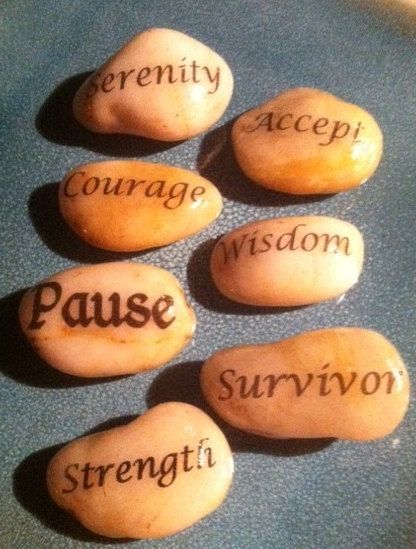
I love to collect as well as give my friends and family small rocks with meaningful words inscribed on them. I gave my daughter a rock last week that says, protection. One of my stones says, accept. It sits on green moss in my Orchid plant on my desk. It is a reminder that there are some things I cannot change and I have to accept in peace. I do. I can only account for my behavior, not the behavior of others. Taking the high road also means not keeping negative influences or people in the picture, allowing yourself to focus on what truly matters.
Naturally, I will continue to take the high road. It is who I am. A GRANDWOMAN with moxie always prefers a positive path. But, to be GRAND she must also ‘know her customer’ and when push comes to shove and she knows that fighting fire with fire might wake up the other person… she should retaliate with all her might. Amen.

If you enjoyed this article, please subscribe. Each daily story will be delivered straight to your inbox.
Foot problems can crop up at any age. But many common foot conditions become more and more prevalent as we get older. While many people assume that foot pain is an unavoidable part of growing older, there are actually a number of ways to
+ show Comments
- Hide Comments
add a comment