
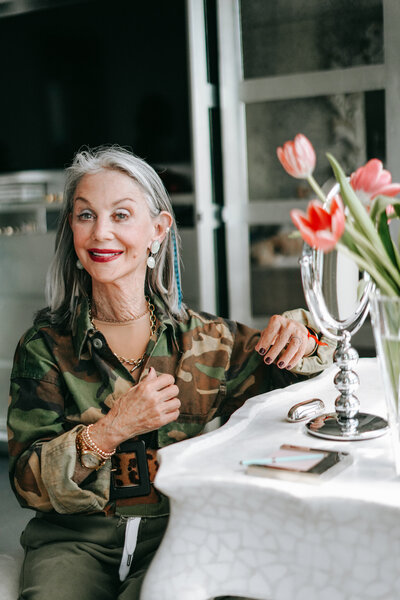

May is Mental Health Awareness Month, and in honor of it, I want to dedicate this Sunday Story to the importance of self care. I chose to do this not only to feel better mentally, but to live more beautifully, more intentionally, and with greater peace of mind.

You’re only as old as you feel.
Age is just a number.
Young at heart.
We have all heard these phrases, and while they may sound like clichés, there is truth tucked inside each one. Aging is so much more than a physical process. It is emotional, spiritual, mental, and deeply personal.
There are plenty of things you can do to slow down the hands of time physically, so you can continue to look and feel your best. But taking care of your mind and spirit is just as important as caring for your appearance. Self care practices that support both your physical and mental well-being are linked to a longer life, and more importantly, to a more joyful one.
So how do we practice self care in a meaningful way, especially as we grow older and life becomes more layered? We begin by paying attention. To our habits. To our surroundings. To our needs. To our sorrow. To our joy. Self care matters because it not only supports your mental and physical health, but also improves your quality of life and helps prevent illness.

Change Your Daily Habits
One of the best ways to practice self care every day is to make small adjustments to the things you already do. That includes your sleep, eating, and physical activity habits. These are all key components of physical self care, which is essential for maintaining both your mental and physical well-being.
Unfortunately, sleep disorders are fairly common in older adults. You might have trouble falling asleep, or you might wake up frequently throughout the night. Not getting enough sleep is more than just an annoyance. It can lead to serious health complications and can increase your risk of developing depression. Prioritizing sleep is a foundational self care strategy that can enhance your overall well-being.
Talking to your doctor about any sleep problems you’re having is a good place to start. But, you can also change some of your sleeping habits, including:
- Going to bed at the same time each night
- Creating a peaceful environment for sleep
- Avoiding electronics an hour before bed
- Limiting caffeine consumption
- Avoiding naps throughout the day if they interrupt your nighttime rest
In addition to keeping you mentally and physically healthy, getting enough rest can boost your energy and help you stay physically active each day. Exercise is a natural way to improve your mood, and a necessity to prevent some early signs of aging. Aim for at least 150 minutes each week of moderate to intense aerobic activity as part of your regular exercise routine, which benefits both your physical and mental health. Regular movement, even a walk with purpose, can be one of the most healing gifts you give yourself.

Self Care Meal Planning
Finally, consider making some dietary changes. Not only will limiting processed foods and saturated fats benefit your physical health, but focusing on healthy fats, lean meats, and plenty of fruits and vegetables can improve your mood and help you to age gracefully. These habits are important steps toward achieving a healthier life.
I recently came across an article on bone health. It suggested drinking goat milk and eating goat yogurt and goat cheese. Not one to miss out on trying something new, I bought the brand Meyenberg that the article suggested. Darling, the milk and yogurt are delicious!
I also read an article about gut health. It recommended fiber-rich foods such as avocado, fresh oatmeal, chia and flax seeds, and lentils. There are other categories that call for yogurt, kimchi, and sauerkraut. I happen to love kimchi! You see, self care can be as simple as becoming curious and saying yes to something nourishing.
Evaluate Your Surroundings
I know you know that your environment can have a major impact on your mental health. If you’re constantly feeling stressed or you simply don’t feel inspired by where you are, make some changes. Your environment includes everything from the room’s general aesthetic to the people you spend the most time with. Social self care is just as important as physical self care, as maintaining strong connections with others can greatly improve your overall well-being.
You can start by making changes to your home décor. Changing your home atmosphere to something that makes you feel calm is a great way to practice self care and enjoy it every day. The arrangement of a room, the use of space, the lighting, and even the color can make a big difference in how you feel. Choose things that inspire you and bring a sense of calm. You can transform every room in your house into a space that fits a specific mood or evokes a different emotion. And taking on that kind of project can be self care in itself.
Self Care in Hard Seasons
Before my Ultimate Concierge became ill, I was in the process of turning our guest room into my private salon. The room has a sitting area, my workout area, and a hideaway bed for guests. That hideaway bed has been a lifesaver. My grandson Michael stayed with me for five weeks a month ago, and my daughter-in-law, Jami, stayed for a month last winter. I will admit I missed my salon, but what I received in return was well worth the loss.
In addition to your physical surroundings, think about the people you surround yourself with. Mental health problems can be a big risk for older adults, even if they shouldn’t be considered a normal part of the aging process.
Since my hubby’s fight with dementia, I have not been in the mood to be with people. The few times I do indulge, I think about what is going on at home and feel guilty and worried about leaving my ultimate concierge. Though I go out for a manicure and pedicure and have my hair done, I rarely attend my book club or go to lunch. I have never gone out to dinner with the girls. I occasionally play mahjong at our home. This is self care, Honey Good style. I feed my needs by staying near my hubby. I do not know how others in my position feel about my choice, and truthfully, there is no right or wrong. I suggest you follow your heart. It knows.

Friendships and Self Care
For those of you leading a more typical lifestyle, I think it is important that you make sure you have people in your life who will support you and be a listening ear. Involving family members in self care activities, such as shared meals or outdoor activities, will help strengthen your social well-being and foster a sense of community. Spending time with supportive people can also provide emotional support, which is essential for mental health.
If there are individuals who seem intent on bringing you down, criticizing you, or causing conflict in your life, it could be time to let them go. Just look at the delete key on your computer and… delete. It’s normal to feel overwhelmed by certain relationships, so adjusting your social circle is sometimes necessary for your well-being. Taking care of yourself involves building a support system. Chances are, you already have a few people in mind whom you know you can trust and turn to for anything. Spend more time with them, and let them know how much they matter.
And Darling, do not underestimate the power of a compliment between women. Last week I was at the hairdresser’s signing my credit card bill when the owner signaled for me to come over. A woman, a stranger, sitting in his chair, told me how much she loved my hair. I said, “How special of you to compliment me. It is so nice when a woman can compliment another woman.” It actually makes both women feel good.
Indulge and Splurge When It’s Necessary
Because “self- are” has become a buzzword, many people think it means buying expensive jewelry, a new car, or treating yourself to a trip around the world. That is not the truth. Selfcare is mostly about little things you can do every day to focus on your well-being. That could include things like:
- Cooking your favorite meal
- Reading a good book
- Watching one of your favorite movies
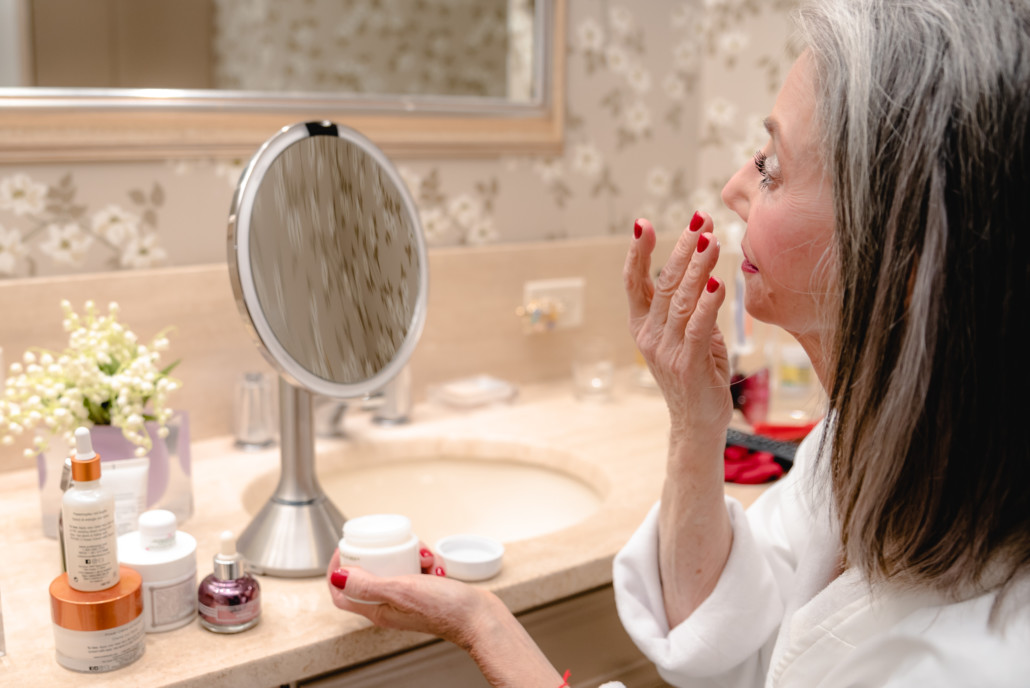
- Creating a spa day at home and pampering your skin
- Engaging in leisure activities that calm or inspire you
- Buying a pooch, a cat, a bird, or even a goldfish
Self care activities can be simple and enjoyable, and sometimes, when life feels out of balance, it’s important to incorporate more self care into your routine.
There are, however, instances in which it’s perfectly okay to splurge a little. Have you developed a travel bug and you haven’t been able to go anywhere because of the pandemic? It’s okay to treat yourself to a plane ticket, or a weekend road trip with someone you love.

Self Care Travel
I did not want to leave my ultimate concierge this winter, but when important reasons, at least to me, presented themselves, I pushed myself to board the train, so to speak, and I am so happy I made that choice. I surprised one of my daughters and flew to Arizona for her birthday. I traveled to Florida for a ZOA Gala, and I am going to California in May for three days with another daughter to celebrate both my granddaughter’s birthday and my own.
I have mixed feelings about leaving home, even though my ultimate concierge is in his own world 95 percent of the day, because I am more comfortable and at peace at home. I made this choice because I know it is not an escape, but rather a brief crossing to gather some light, laughter, and warmth, and to catch my breath among my family, who can temporarily refill me.
I made my decision to travel because leaving my ultimate concierge is not abandoning him. To travel to be with my family or attend an event is, for me, choosing oxygen over stillness. It is refilling my own well so I can keep pouring and hold on to a bit of joy that steadies me. I am not telling you what to do. I am simply nudging you. I am smiling.
Feeling Good in Your Skin
Are you struggling with self-image issues as you age? If so, it’s your prerogative to consider different plastic surgery procedures. Cosmetic surgery has been around for a long time and is becoming increasingly safe.
Whatever the case, if you’ve considered plastic surgery in the past but have put it off, now could be a perfect time. Even a simple procedure like Botox has become increasingly common. A small aesthetic choice can sometimes create a very large emotional lift.
While improving your self-image, nips and tucks or injections can positively affect your emotional health and physical appearance. There is no shame in wanting to feel better when you look in the mirror. This, too, can be a form of self care, if it is done for yourself and from a place of self-respect.
Young At Heart
Taking care of your mental health as you age is crucial. Supporting your psychological well-being through self care helps maintain mental sharpness, reduces stress, and fosters a sense of purpose as you grow older.
Not only can it boost your physical health, but, as the old saying goes, “you’re only as old as you feel.” Nurturing your mental and emotional health is essential for happiness and longevity. With less stress and a positive outlook on life, you can feel young at heart and happy for many years to come.
That, to me, is the secret. Not chasing youth, but nurturing vitality. Not pretending life is easy, but choosing to care for yourself so you can meet it with grace. These practices all contribute to your overall wellness as you age.
The Importance of Gratitude
Gratitude is one of the most powerful self care practices you can add to your daily routine. When we take a moment to focus on what we’re thankful for, we naturally shift our attention away from stress and negative thoughts, making room for more positive emotions. Practicing gratitude isn’t just about feeling good in the moment. It can also support emotional regulation and help ease feelings of sadness and stress.
Incorporating gratitude into your self care routine can be as simple as keeping a gratitude journal, where you jot down three things you’re grateful for each day, or sharing your appreciation with a friend or family member. These small acts can have a big impact on your mental health and overall health, helping you reduce stress and build resilience.
I have long believed that grateful people are happier people. Gratitude does not erase difficulty, but it changes the light in which we see our lives. It softens the hard edges. It reminds us that even on imperfect days, there is still something worth treasuring.
By making gratitude a regular part of your daily routine, you’ll find yourself feeling lighter, more optimistic, and better equipped to handle life’s ups and downs. Remember, prioritizing gratitude is a simple yet profound way to nurture your well-being and slow down the rush of daily life.
Sleep and Self Care
Quality sleep is the foundation of both physical and mental health, and it’s a cornerstone of any effective self care plan. When we get enough sleep, our bodies have the chance to repair and recharge, while our minds process emotions and memories. On the other hand, sleep deprivation can take a toll on our immune system, increase stress and anxiety, and leave us feeling run down and less able to cope with daily challenges.
Prioritizing sleep means making it a non-negotiable part of your self care routine. This might involve creating a calming bedtime ritual, turning off screens an hour before bed, or making your bedroom a peaceful sanctuary. Aim for 7 to 8 hours of sleep each night to support your overall well-being and help your body and mind recover from the day.
A woman who is rested can face the world differently from a woman who is depleted. Never underestimate the power of a good night’s sleep. It is medicine. By taking care of your sleep needs, you’ll not only reduce stress and anxiety, but also boost your resilience and enjoy a greater sense of balance and vitality in your life.
Creating a Self Care Plan
A thoughtful self care plan is your personal roadmap to better mental health and overall well-being. Rather than leaving self care to chance, take a few minutes to reflect on what activities help you relax, recharge, and feel your best. Your plan should be tailored to your unique needs and might include deep breathing exercises, spending time in nature, or enjoying hobbies that bring you joy.
Scheduling self care into your daily or weekly routine ensures you’re consistently taking care of yourself, even when life gets busy. Whether it’s a few minutes of quiet reflection, a walk outside, or a creative project, these moments of self care add up to a healthier, more balanced you. Self care should not feel like a burden or another task to check off. It should feel like an act of devotion to your life.
By making self care a priority, you’ll find it easier to reduce stress, support your mental health, and enhance your overall well-being, one small step at a time.
Motivation for Self Care
Staying motivated to practice self care can be difficult, especially when you’re feeling overwhelmed or stressed. But reminding yourself of the benefits, like improved mental health, reduced stress, and greater resilience, can help you stay on track. Try setting gentle reminders in your calendar, or share your self care goals with a trusted friend or family member who can provide encouragement and emotional support.
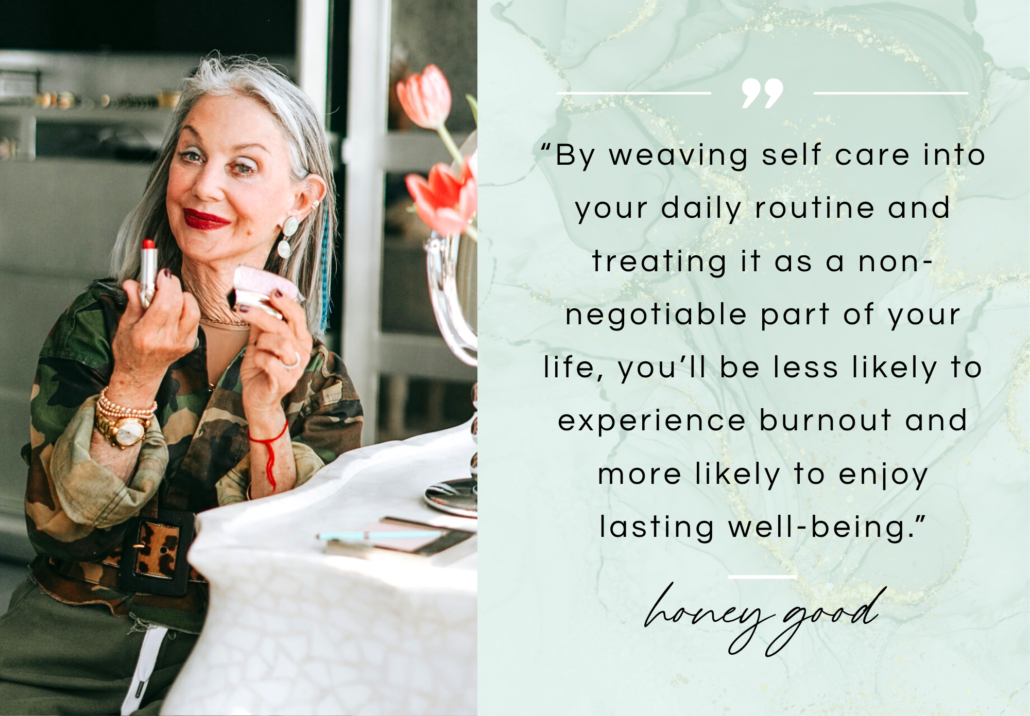
Tracking your progress and celebrating small successes can also boost your motivation. By weaving self care into your daily routine and treating it as a non-negotiable part of your life, you’ll be less likely to experience burnout and more likely to enjoy lasting well-being. And if you are struggling more deeply, do not hesitate to reach out to your doctor or a mental health professional. Asking for help is not weakness. It is wisdom.
Remember, taking care of yourself isn’t selfish, Darling, it is essential. How do you take care of yourself and your mental health through self care? I would love to hear from you in the comments below.


+ show Comments
- Hide Comments
add a comment